Field Notes · Dispatch Nº 001 · Joplin, Missouri · May 22, 2011 · 5:11 p.m.
The Joplin tornado had 24 minutes of warning.
It wasn't enough.
Nearly double the national average lead time. Sirens that sounded twice. And still the deadliest single tornado in modern American history. This dispatch is about the gap between hearing a warning and believing it.
Paul Raymond · The Warning Hour
17 min watch · 7 min read · Published August 26, 2026
It was a Sunday evening in late May: graduation day at Joplin High School. At 5:11 p.m. the sirens sounded across the city. The tornado warning had been issued with 24 minutes of lead time, nearly double the national average. By every measure the system worked. And 161 people died anyway.
The question this episode sits with is the one every post-storm report circles and few answer plainly: why did more warning not mean more safety? The National Weather Service's own service assessment: the agency investigating itself: found the answer wasn't in the radar. It was in the years of sirens that had sounded before, for storms that never came.
"The sirens sounded twice. The second time, people went to their windows to look: not to their shelters."
: From the episode, on the NWS Central Region Service Assessment, Joplin 2011
What the report actually found
Three findings from the assessment carry straight into things a household can fix this weekend, without waiting for any city to change its siren policy.
- Nº 04. A trigger plan beats a warning.
Decide: in writing, before the season: which exact signal moves your family to shelter. Not "when it looks bad." A named signal, one sentence. Our free family emergency plan template has the fill-in line.
- Nº 23. Pick the safe room before the siren.
The lowest floor, smallest interior room, most walls between you and outside. Deciding during the warning takes longer than the warning. The safe-room guide walks the selection.
- Nº 61. Own the second alert channel.
Joplin's outdoor sirens weren't built to be heard indoors. A NOAA weather radio with battery backup is the indoor siren: it names your county and it wakes you up.
In the episode
- 0:00The Dispatch Call
- 1:37Watch Issued: Then Waiting
- 3:26The Warning: 24 Minutes
- 5:26Two Sirens, One Sound
- 6:36St. John's Medical Center
- 10:54The NWS Investigates Itself
- 11:59Polygon vs Siren Zone
- 13:37The Quiet Fix
Questions people ask about Joplin
- How many people died in the Joplin tornado?
- 161 lives were lost; the NWS directly attributes 158: the deadliest single U.S. tornado since modern record-keeping began in 1950.
- Was there a warning before the Joplin tornado?
- Yes: a tornado warning was issued at 5:17 PM, 24 minutes before impact, and sirens sounded twice, at 5:11 PM and 5:38 PM.
- How strong was the Joplin tornado?
- EF5, winds over 200 mph: a multiple-vortex tornado roughly one mile wide with a 21-mile damage path through Joplin, Missouri, on May 22, 2011.
- What changed after Joplin?
- The NWS adopted impact-based warnings with escalating language ("catastrophic… unsurvivable if above ground"), and Joplin rewrote its siren policy: a siren now means one thing only: take shelter now.
- NWS Central Region Service Assessment: Joplin, Missouri Tornado, May 22, 2011
- NIST NCSTAR 3: Technical Investigation of the Joplin Tornado
- NOAA NEXRAD Level-II archive, KSGF Springfield
- Jasper County public-safety radio traffic archive
- Field Guide: Tornado Warning vs. Watch
The two words the weather service will use on the worst day of your year: and the one-sentence rule for each.
- Free Checklists: The printable library
Trigger plan, safe room, go-bag, emergency binder, home inventory: free, no email asked.
- State Guides: Your state's storm page
Shelter rebates, the agencies that answer, and the three hazards your state actually faces.
The part the episode can't do for you
A film can show you why Joplin's sirens failed to move people. It can't pick your safe room, fill in your trigger plan, or put a weather radio on your nightstand. That part is a Saturday's work: and it's the reason the book exists.
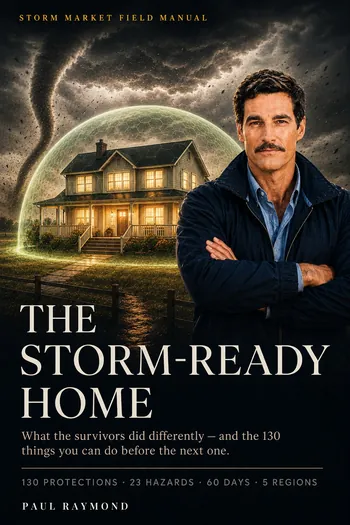
The 130 things you can do before the next one. A 486-page manual built from the post-storm reports: including Joplin's. 130 numbered protections, 23 hazard playbooks, a 60-day sequence, and the printable binder.
Instant PDF · Pay once, own it forever · 7-day money-back guarantee
Sources for this dispatch
The archive
More field notes.
Get the book
The Storm-Ready Home is a 486-page manual built from post-storm reports: 130 numbered protections, 23 hazard playbooks, the 60-day sequence, and the 61-page printable binder, every figure cited.